
Getting Around Madeira in 2026: The Ultimate Transport Guide for Visitors
Madeira’s steep roads and scattered attractions make transport planning essential. This 2026 guide covers every way to get around: SIGA GIRO buses (fares, passes, key routes), taxis, Bolt/Uber limits, car rentals and scooters, Madeira’s cable cars, and the ferry to Porto Santo—plus local tips on rush hours, apps and what to book ahead.
Audrey Zarlenga··Updated
Madeira's topography, with its steep roads and coastal terrain, doesn't make it very easy to travel quickly between attractions such as levadas, beaches, and viewpoints, but with a little planning, you’ll be able to make the most of your stay.
This guide provides a quick history overview of traditional transportation methods in Madeira, as well as in-depth dive into available transport options, including public buses via the SIGA GIRO system, ferries to Porto Santo, and other services tailored for tourists. It covers practical details for various traveler needs, from urban routes in Funchal to regional connections.
Please note: All pricing mentioned in this article is up to date as of February 2026 but might change in the future.
A short History of the Traditional Means of transport in Madeira
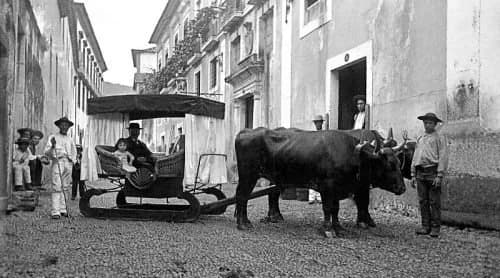
The island of Madeira, located in the middle of the Atlantic, is known not only for its mountainous landscape and lush vegetation, but also for its traditional means of transport that reflect the rich local culture and history.
These means of transport, some of which are still in use today, have played a key role in the development of the region and in the daily lives of the Madeirans.
Photo credits: https://www.madeiraislanddirect.com/
The network of paths and pedestrian mobility
Before the construction of modern roads, transportation in Madeira was extremely challenging due to the rugged terrain. Mobility largely depended on networks of trails and narrow paths, known as “veredas” and “levadas”.
The veredas were trails that connected villages and rural areas. The levadas, irrigation canals that run through much of the island, not only carried water but also served as paths for those who needed to travel on foot.
It was common for locals to carry goods on their backs or use wicker baskets tied to mules to carry agricultural products, such as bananas, grapes and potatoes (seeds), from rural areas to towns and cities.
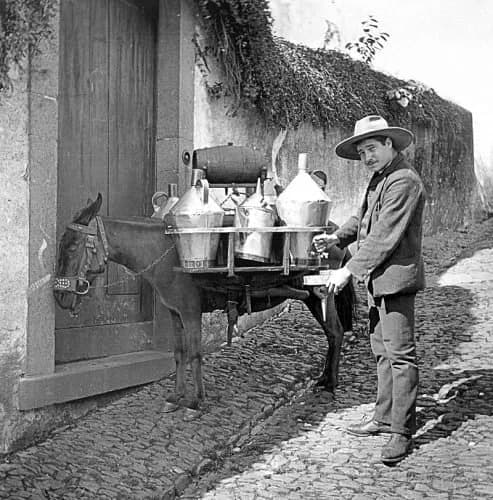
Photo credits: https://www.madeiraislanddirect.com/
Madeira's Forgotten Railroad
Madeira once had a short but iconic rack railway known as the Monte Railway, constructed in 1912 to connect Funchal's Pombal station with Monte, spanning 3.9 km of steep terrain via steam locomotives and the Riggenbach rack system. It was popular among wealthy tourists and locals for quick ascents offering stunning city views, and revolutionized access to Monte's churches and gardens until tragedy struck: a devastating boiler explosion on September 10, 1919, killed four passengers and injured others, shattering public confidence.
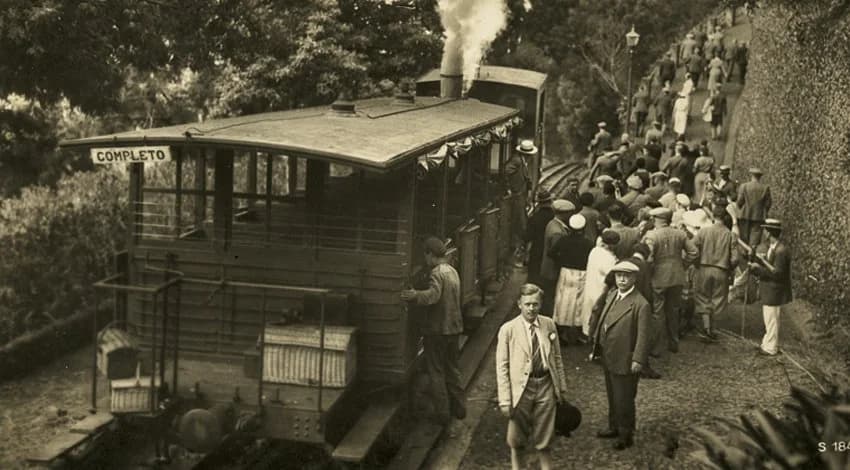
Photo credits: https://essential-madeira.com/en
Operations resumed briefly in 1920 with new locomotives, but a 1932 derailment created fear in the railway, while World War II slashed tourism and finances crumbled. The line made its final run in April 1943, after which tracks were dismantled, assets scrapped and stations repurposed. Today, no revival plans exist due to the efficient Funchal-Monte cable car.
Instead of trains, buses, rideshares, rentals, taxis, ferries and cable cars keep the island moving — in 2025 Madeira recorded around 2.5 million guests in tourist accommodation according to DREM (not to be confused with nearly 13 million overnight stays). Let’s dive in, starting with the most popular option: buses.
How to move around Madeira in 2026
Mastering Buses: SIGA Network
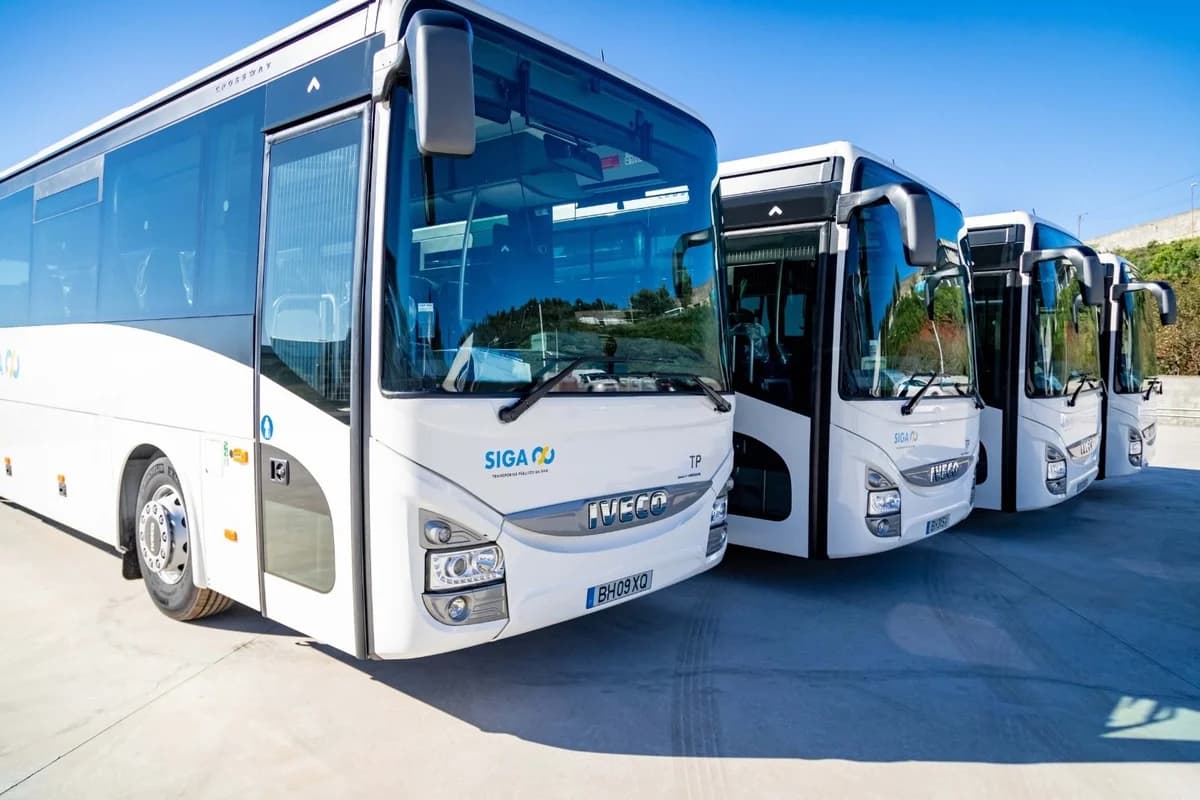
For tourists, SIGA buses show unbeatable value, offering panoramic rides past laurel forests and ocean vistas at a fraction of the car rental costs, but be aware, buses do not cover the whole island and waiting times outside of Funchal can be long.
Until recently, the system was very complicated, with buses split between 4 companies: Horários do Funchal (urban yellow buses), SAM (east coast of Madeira), Rodoeste (west coast), and Caniço (south coast). In 2024, SIGA replaced all four and created one seamless network for the whole island. No more app-hopping or ticket confusion; one GIRO card works for all buses.
SIGA Coverage and Reliability
Funchal is very well connected. Once you head to the north coast or transfer between several towns, things get slower: routes cover the main island, but frequencies drop and waits get longer.
Important: since March 2026 SIGA has been rolling out a unified three-digit line numbering (old numbers may still appear at stops). Check current numbers and timetables on the SIGA website or in Google Maps.
Popular connections (new numbers):
- 380 / 381 Funchal – Porto Moniz via Calheta (~3 hours; formerly 80/81)
- 340 / 341 Funchal – Porto Moniz via São Vicente (formerly among others 139)
- 500 Aerobus between the airport and Funchal (hotel zone)
- 020 / 021 Funchal – Monte (cable-car alternative)
- 181 Funchal – Curral das Freiras
- Urban Funchal lines to the seafront, markets, cable car and Lido — often every 15–30 minutes
There is no regular public bus to Pico do Arieiro. You’ll need a rental car, taxi/rideshare, carpool or an organised tour.
Rural lines are thinner — on the north coast often only 1–2 buses per hour.
New for 2026: vending machines at key stops (mainly in Funchal) sell tickets 24/7.
Fares, Tickets, and Money-Saving Hacks
You can buy your tickets on board with cash (but please bring the exact change! Coins under €0.05 will not be accepted), but GIRO cards (€0.50-€5 load fee) slash fares 25-40%. You can then buy/reload your card at 200+ Payshops (Pingo Doce supermarkets), Anadia Shopping kiosks, or Funchal's Avenida do Mar booths. Kids between 6 and 12 pay half; under-6 is free. Seniors and students get social passes.
Expect 2026 fares like this: €2 cash (€1.45 GIRO) for Funchal municipal hops; €2.60 (€1.95 GIRO) interurban (most tourist jaunts).
The Airport–Funchal Aerobus is around €6.50–€6.70 (depending on tariff/source; often a bit cheaper with GIRO).
Tourist steals: You can buy a 24h pass (€12.50 GIRO) for unlimited SIGA bus rides; 3/7-day options have been rolled out in Jan 2026.
Insider tip: Loading around €20 onto a GIRO card often covers a week of bus travel — on Madeira and on Porto Santo too (SIGA/GIRO also works for buses there). The ferry to Porto Santo is a separate ticket and is not covered by GIRO. Buses only drop you at trailheads if a line actually goes there — many trail starts need a car or tour.
| Public Buses | Pros | Cons | Average Costs | Best For |
|---|---|---|---|---|
| SIGA Buses | Affordable fares, scenic routes, island-wide network, dense and regular coverage within Funchal. | Long waits in the north or rural areas (1-2/hr), uneven coverage. Avoid if you are going to remote or isolated locations. | €1.45–€1.95/trip with GIRO€2–€2.60 cash€12.50 for the 24h pass | Budget tourists, scenic day trips, Funchal urban hops |
Madeira’s famous cable cars
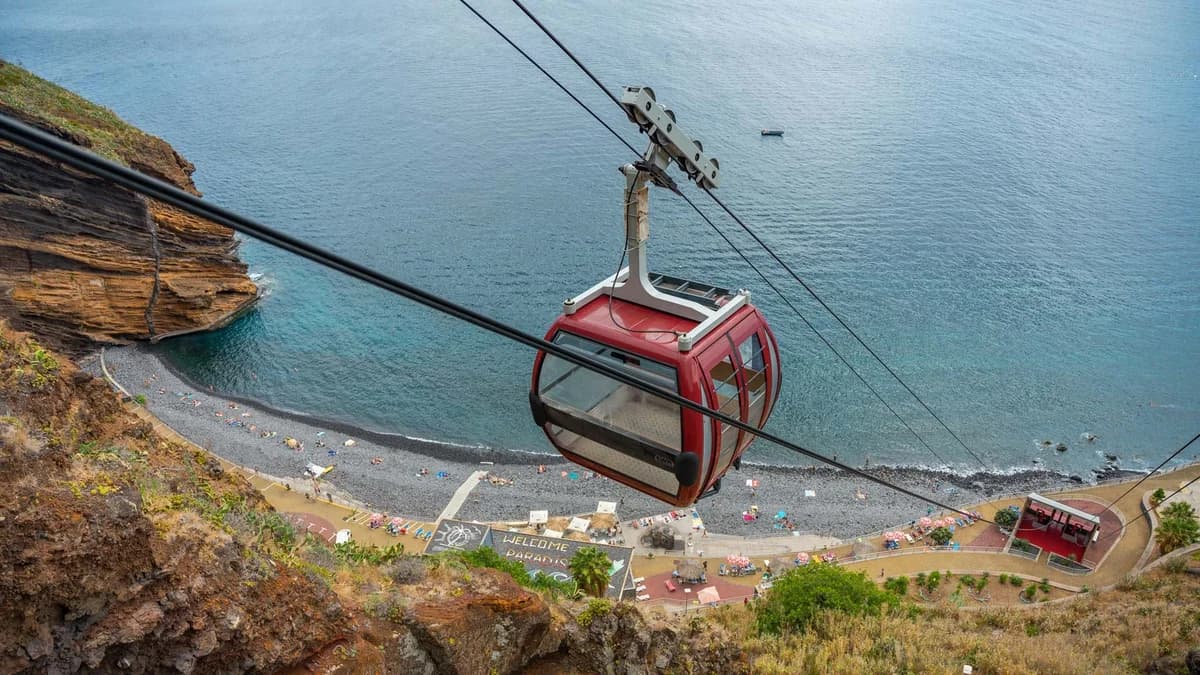
Photo credits: VisitMadeira
Madeira has 7 cable cars, or teleféricos. The main one runs from Funchal's Almirante Reis station up to Monte, a 15-minute ride that climbs 560 meters. Tickets cost €16-18 round trip. It ends near Monte Palace Tropical Garden and near the wicker toboggan start. As an alternative uphill: buses 020 or 021 (~€2 each way).
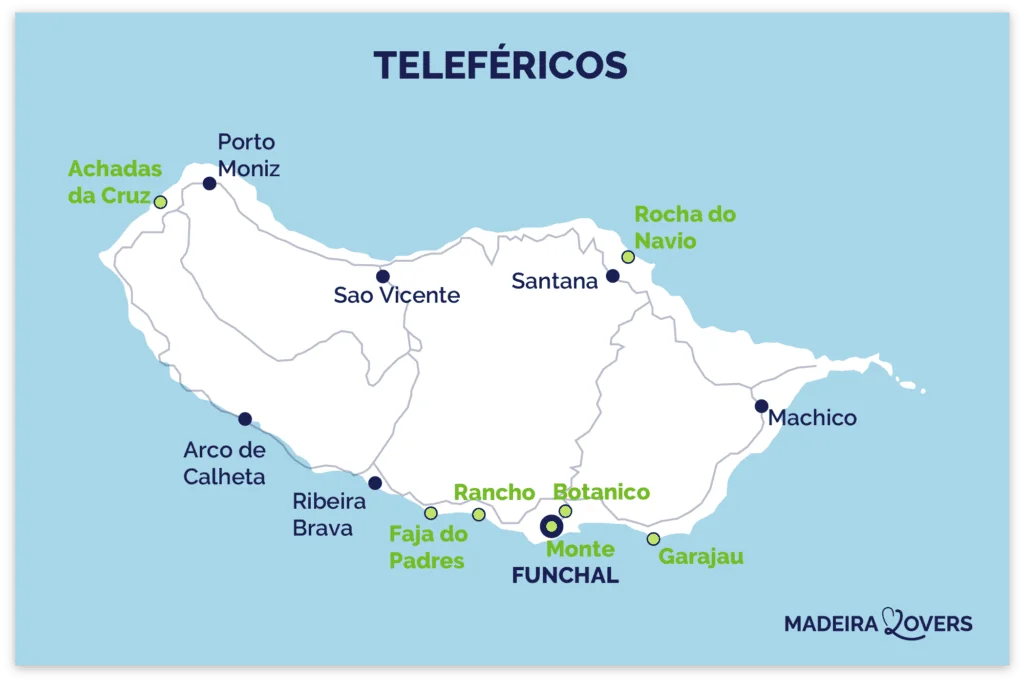
Photo Credits: Madeira Lovers
The other 6 cable cars are lesser known but are much cheaper and allow you to discover beautiful hidden sides of Madeira:
-
The Botanical Garden cable car (€10 round trip. It takes 9 minutes across Ribeira de João Gomes and offers great views over Funchal),
-
Rancho - Cabo Girão (€5 round trip. Everyone goes to the Skywalk, the semi-transparent platform above the cliffs, but we much preferred the cable car down the giant cliffs. In only 6 minutes, you can enjoy the waterfront)
-
Fajã dos Padres (~€12 round trip for the cable car; optional add-ons such as guided visits are available on site)
-
Ponta do Garajau to Cristo Rei (€3 return ticket. This cable car takes you to a pretty pebble beach, famous for snorkeling and diving)
-
Achadas da Cruz (5€ return ticket, it is the steepest in Madeira and brings you down to sea-level farms in only 5minutes),
-
Rocha do Navio (5€ return ticket, descending sideways with beautiful views of the sea, the cliffs and a waterfall)
Book ahead online. Go early to skip lines. From Monte, take a SIGA bus back to town or take a traditional wicker ride.
| Cable Cars | Pros | Cons | Average Costs | Best For |
|---|---|---|---|---|
| 7 Cable Cars across the island | Give you access to stunning places otherwise hard to access, beautiful views, short rides, and adrenaline | Check for seasonal closure times. Some cable cars will have long waiting lines in peak season. Weather-dependent transport | €3–€18 round-trip | Viewpoint access, visiting remote/secluded locations, families/short hops |
Rideshares: Bolt and Uber – Urban Wins, but Rural Risks
In Funchal's bustle, Bolt and Uber truly shine: you can easily summon cars from your app to the airport (€15-25), to Funchal nightlife, or for Câmara de Lobos dinners.
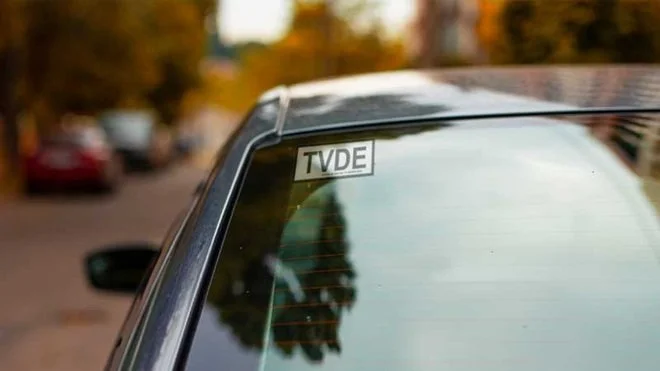
Pro tip: Check for the TVDE sticker on their car to make sure this is a legally registered driver.
Please note: On weekends and during major events, app prices often rise with demand (surge pricing).
With now ~750 drivers, wait times in Funchal average 5-10 minutes centrally outside of peak hours, but can be nearly impossible to find on the north coast or in remote villages: limited coverage plagues the north (no Porto Moniz pickups), interior villages (Paul do Mar, Arco da Calheta), and Porto Santo. 20+ minute waits are common outside of Funchal; cancellations spike on rainy days or busy days. It is great for short hops, but not so much for levada marathons – better to pair it with buses.
| Rideshares | Pros | Cons | Average Costs | Best For |
|---|---|---|---|---|
| Bolt / Uber | Convenient app booking, short Funchal waits (5-10 min), competitive pricing | Poor rural/north coverage, higher peak/event prices, rain cancellations | Traditionally ~50% cheaper than taxis~€25 airport to Funchal | Urban Funchal, airport transfers, groups/nightlife, hopping between cities |
Vamos Juntos: Madeira's Hot New Carpooling App
Enter Vamos Juntos, the 2025 game-changer for shared rides. Post or join carpools for airport runs, trailhead shuttles, or Porto Moniz pub crawls – fares negotiated (€5-15/person).
Tourist fave: Hike PR1 Vereda do Areeiro? Instead of pricey tour operators, match with locals. Watch this space closely as Vamos Juntos is now emerging as SIGA's flexible sidekick!
| Carpooling | Pros | Cons | Average Costs | Best For |
|---|---|---|---|---|
| Vamos Juntos | Flexible for hikes/remote areas, local matches, low shared costs | App-dependent, variable reliability, negotiation needed | 50% cheaper than Uber/Bolt | Hikers, airport runs, north coast groups, city hops during the day |
Car and Scooter Rentals
The majority of people decide to rent cars or scooters in Madeira because it lets you go wherever and whenever you want. Roads here are narrow and steep, though, and with more visitors each year, popular spots like trailheads (especially Pico do Arieiro) and Funchal fill up with cars, so parking gets tough—often you may end up circling blocks or walking farther than planned. Cars run €30-100 a day and scooters €20-40; it's more than buses, but you get full control.
Pro tips:
- In the Madeira Unlocked app you’ll find partner discounts on car and scooter rentals and much more — now over €1,000 in potential savings.
- For rental cars we strongly recommend automatic: the steep stretches and stop-and-go on hairpins are far more relaxed that way.
- On two-lane roundabouts, stay in the inner lane unless you’re taking the next exit — then stay outer. That matches how local traffic usually flows (right-hand traffic).
- When renting a car or scooter, get full insurance to avoid any unpleasant surprise.
- Wear the required helmet on scooters so that police don’t stop you, and steer clear of the road on very rainy days.
| Type | Pros | Cons | Average Costs | Best For |
|---|---|---|---|---|
| Car Rentals | Flexible freedom, explore anywhere | Steep/narrow roads scary, full insurance needed | €30–€100/day | Independent explorers, families/multi-days |
| Scooters / Mopeds | Fun coastal thrills, cheap | Helmets required, rain risks, hairpins | €20–€40/day | Solo coastal adventures, young travelers |
Expanded Options: Taxis, Ferries, and Guided Tours
-
Taxis offer reliability: Metered (€2 start + €2/km) or fixed airport fares (€25-35 Funchal). Night surcharges apply.
-
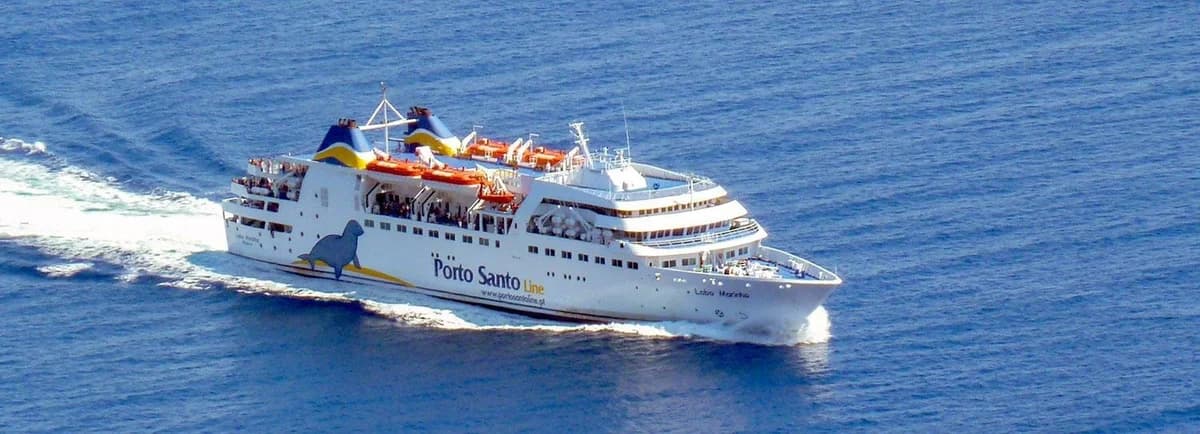
Ferries: You can easily whisk to Porto Santo's golden sand beaches (€43 return ticket, 2.5hrs). But book ahead in summer as it is a popular destination for both tourists and residents alike; buses connect the Ferry departure at the Funchal Harbour to the rest of the Funchal area.
-
Guided tours shine: Ideal for remote activities, coastal paths (Vereda dos Balcões); inaccessible viewpoints like Cabo Girão Skywalk these guided minibuses or TukTuk tours (€20-100/day) often include transport from the main south coast cities and a guide who will teach you a lot about tradition, history and Madeiran culture.
| Type | Pros | Cons | Average Costs | Best For |
|---|---|---|---|---|
| Taxis | Reliable, metered/fixed fares, 24/7 | Higher costs, negotiate groups, surcharges nights | €25–€35 airport | Short/reliable trips, emergencies |
| Ferries (Porto Santo) | Island-hopping, beaches | Summer book ahead, 2.5hr crossing | €43 return | Day trips to Porto Santo sandy beaches |
| Guided Tours | Expert access to remote places, info/history | Fixed schedules, group pace | €60–€100/day | Levadas / inaccessible spots, first-timers |
Insider Tips to Navigate Like a Local
- Traffic Hack: Although Funchal does not witness as much traffic jams as other European cities, it is best to avoid rush hour around Funchal (8-10am, 5-7pm).
- Apps: Madeira Unlocked for events and gems + Google Maps offline for navigation + Vamos Juntos for ride sharing.
- Emergencies: Call 112.